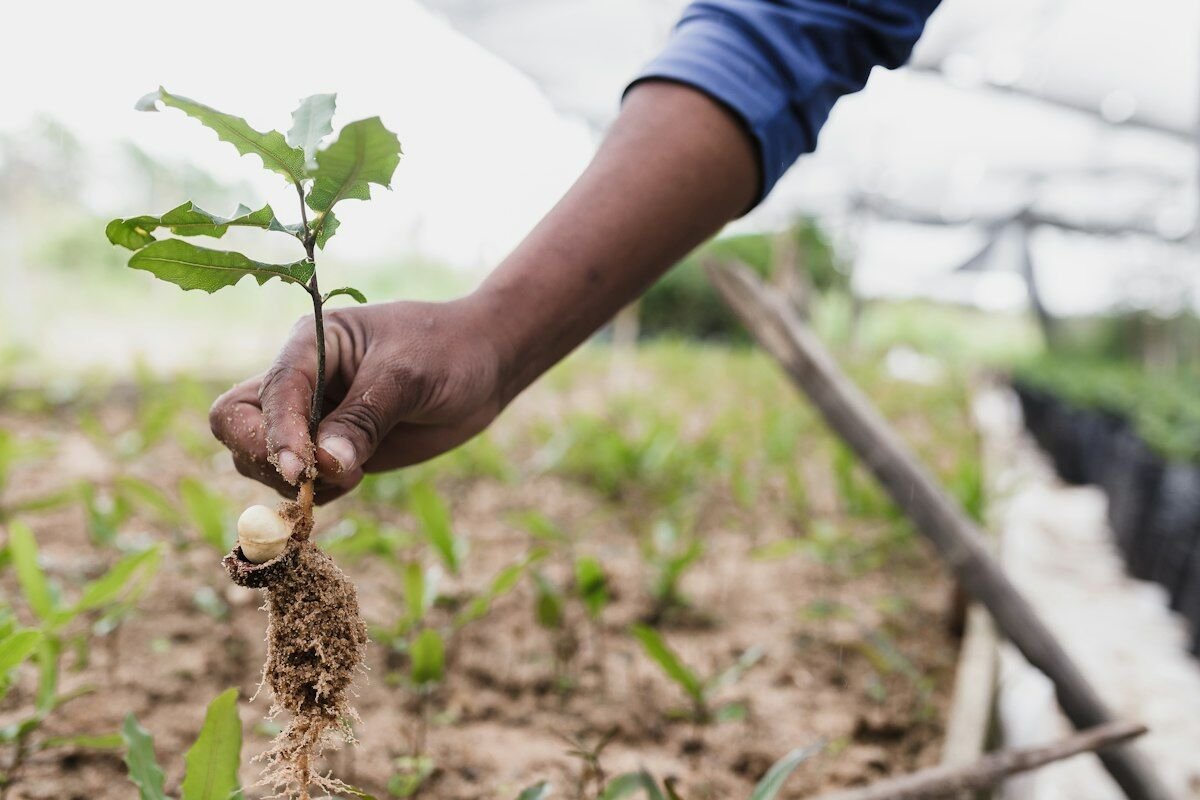
Put a tree in the right spot and it’ll shade a hot wall, frame a nice view and give the birds somewhere to sit. Put it in the wrong spot and it ends up lifting the paths, crowding the roof and getting into the sewer. Most of the time the difference is a bit of planning before anyone digs the hole, and that can save you a lot of money later on.
The rules aren’t the same in every state or with every water authority, so check with your council and water provider, but the general thinking works pretty much anywhere.
What’s the tree for?
Have a reason for every tree. Maybe it’s summer shade for a west facing window, or some privacy from the neighbours, or just a feature in the back lawn. Once you know what you want it to do, it’s much easier to pick the right height and canopy spread. That sort of thinking is a big part of why landscape design matters in any yard.
The Your Home guide notes that deciduous plants let winter sun in through their bare branches and block summer sun with their leaves. So a leafy tree near a living area can shade it in summer and still let the light in over winter. For most climates the guide suggests deciduous vines or trees to the north, and deciduous or evergreen trees to the east and west. In hot humid climates, evergreen planting is often the better pick.
Low morning and afternoon sun from the east and west is hard to block with eaves alone. The Your Home guide to shading recommends planting to filter it, with tall canopy trees for roofs and bigger parts of the building and shrubs for shading a single window.
In cool temperate climates the guide warns against planting to the north where trees would block the winter sun, since that’s free heating for your living areas in the colder months. A big evergreen on the north side can leave the house darker and colder for half the year. So think about where the sun sits in June, as well as in January.
Picking the tree
The Your Home guide recommends local native species with low water needs, and says to avoid plants with destructive roots when you’re planting close to the house. Local natives are usually better suited to your rainfall and soil anyway. In Perth, the native soils of Western Australia have a lot to say about which trees do well.
Your local nursery and council can suggest trees that grow well where you are. Water Corporation in Western Australia publishes guidance on choosing the right tree for verges and public open space, and it rates several local species as low in root invasiveness, including Firewood Banksia and Coral Gum. Lists like that are a handy place to start for home gardens too.
A tree is there for decades, and a smaller species is often a better choice than a big one you end up fighting with. Native trees with low water needs also suit a more sustainable yard design. And if you’re thinking about installing a swimming pool, plan the trees and the pool together, because both need room.
Roots and pipes
Tree roots go hunting for moisture. Water Corporation explains that water and wastewater pipes can be an attractive source of it, and a tiny hairline crack in a pipe is all a root needs to get in. Once it’s in, it can grow quickly and partly or completely block the pipe.
South East Water in Victoria says tree roots cause most of Melbourne’s sewer and drain blockages, mostly at homes. Roots can damage buildings, footpaths, fences and water pipes as well, and fixing it can mean replacing whole sections of pipe. Older homes are more at risk, since both SA Water and Water Corporation note that newer homes are more likely to have PVC pipes.
So how far away should a tree go? There’s no single national rule. The SA Water tree planting guide sorts species into lists and sets 3.5 metres from sewer pipes in home gardens for its second list of trees. It also says trees and shrubs must not be planted closer than one metre to any water infrastructure. South East Water’s guidance is similar, with some plants kept 2 metres from pipes and others 3.5 metres away.
South East Water’s 3.5 metre list includes liquidambar, silver birch, walnut and sycamore, and the 2 metre list includes apple trees, oleander and rosemary. Both utilities treat these lists as a guide, not a full set of rules. SA Water also says to work out the distance using the tree’s size when it’s fully grown, not the size it is in the nursery pot.
Before you plant, find out where the pipes and cables run under your yard. Before You Dig Australia gives free information on underground assets, and the water utilities recommend using it. South East Water also suggests buying a property sewerage plan so you can see where the sewer pipes are on your block. In South Australia, SA Water points people to its Healthy Pipes online map.
This next bit is the one that stings. Property owners are usually responsible for the pipes on their own land. South East Water says owners look after pipes and fixtures up to where they connect to its sewer branch, and SA Water says the same for private pipework and notes a registered plumber has to do the repairs. If your own tree blocks your pipe, the bill is generally yours.
Root barriers go on the edge of the planting hole, between the tree and the pipe. SA Water says they can let you plant closer than the standard distances, as long as the pipe stays sound. Near its own infrastructure, though, SA Water has to assess and approve any barrier first, so talk to your water provider before you rely on one near a main or a connection.
Powerlines and the verge
Look up as well as down. Water Corporation suggests checking Western Power’s clearance zones for safe distances from overhead powerlines. A tree that grows into the wires will need pruning over and over and might end up being removed. Other states have their own network rules, so check with your local electricity distributor.
The verge out the front is usually the council’s to manage. South East Water says to get council permission before planting on a nature strip. In Western Australia, Water Corporation’s verge guidance puts trees 2.7 metres from the property boundary and at least 0.5 metres from water assets. Ask your council which species it allows before you buy anything, and check Before You Dig Australia for that patch as well.